
Introduction
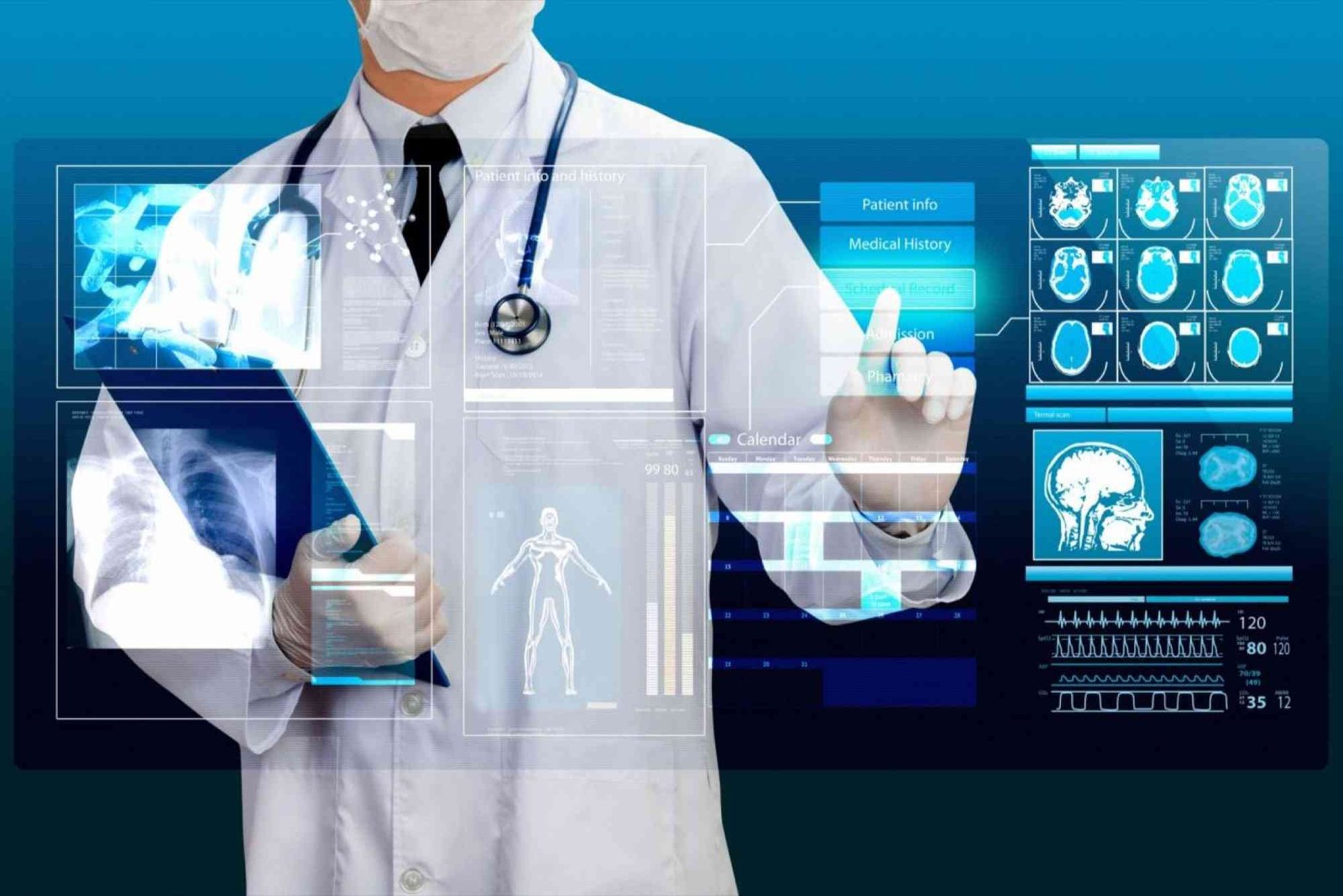
The development of AI in the healthcare sector has transformed the way medical professionals diagnose, treat, and manage patient care. Artificial intelligence, once a futuristic concept, is now at the forefront of modern healthcare, offering tools that improve accuracy, efficiency, and patient outcomes. From predictive analytics to robotic surgeries, AI is reshaping the healthcare landscape, helping doctors make faster decisions and enabling personalized treatments.
The rise of AI in healthcare is driven by advancements in machine learning, big data, and computational power. Hospitals and clinics are increasingly integrating AI tools to streamline operations, reduce errors, and deliver better care to patients. This development is not only enhancing medical services but also opening new opportunities for research, drug development, and preventive medicine. Understanding how AI is evolving in this sector helps us appreciate its potential and the challenges it presents.
AI Applications in Diagnostics
Enhancing Medical Imaging
Medical imaging is one of the most significant areas impacted by AI. Algorithms now analyze X-rays, MRIs, and CT scans with remarkable accuracy. AI can detect patterns invisible to the human eye, helping radiologists identify conditions like tumors, fractures, or infections earlier. Early detection improves treatment outcomes and can save lives.
For example, AI-powered tools in mammography screening are reducing false positives and increasing detection rates for breast cancer. Similarly, AI can assist in identifying lung nodules in CT scans, offering rapid insights that accelerate diagnosis and treatment.
Predictive Analytics in Patient Care
AI is also transforming predictive healthcare. By analyzing patient histories, lab results, and lifestyle factors, AI algorithms can predict disease risks and potential complications. Hospitals use predictive models to identify patients at risk of sepsis, heart failure, or readmission. This proactive approach allows healthcare providers to intervene earlier, reducing hospital stays and improving recovery rates.
Predictive analytics also helps in resource management. By forecasting patient inflow and treatment requirements, hospitals can optimize staff allocation, reduce overcrowding, and ensure critical care is available when needed.
AI in Laboratory Testing
Laboratory testing benefits from AI integration as well. Machine learning models can analyze blood samples, genetic information, and biomarker data faster than traditional methods. This reduces the time required to detect conditions like anemia, infections, or genetic disorders. AI-driven lab systems are not only faster but also reduce human error, improving accuracy in diagnoses.
AI in Treatment and Patient Management
Personalized Medicine
One of the most promising developments in healthcare AI is personalized medicine. By combining genetic information with patient history, AI can recommend tailored treatments. Cancer therapy is a prime example, where AI helps identify which drugs will be most effective based on the tumor’s genetic profile.
Personalized treatment plans improve patient outcomes and minimize side effects. Patients receive care that is specifically adapted to their biology, lifestyle, and environment. This approach is transforming chronic disease management and enhancing the effectiveness of therapies.
Robotic Surgery
AI-powered robots assist surgeons with precision and accuracy. Robotic systems can perform minimally invasive surgeries with enhanced dexterity, reducing recovery time and surgical risks. Surgeons use AI to plan procedures, simulate outcomes, and monitor operations in real time.
Robotic-assisted surgeries are increasingly common in procedures like cardiac surgery, joint replacements, and urology. The combination of AI and robotics reduces human error and ensures consistent surgical performance, improving patient safety.
Virtual Health Assistants
AI-driven virtual assistants support patients outside hospitals. These tools help manage medication schedules, monitor symptoms, and provide guidance for lifestyle changes. They can also triage patient concerns, directing individuals to urgent care when necessary.
Virtual assistants reduce the burden on healthcare staff and improve patient engagement. Patients receive real-time support, reminders, and educational resources, fostering proactive health management and long-term wellness.
AI in Drug Discovery and Research
Accelerating Drug Development
AI is revolutionizing drug discovery by analyzing vast datasets of chemical compounds, molecular structures, and clinical trial results. Traditional drug development can take years and cost billions, but AI speeds up the process. Algorithms can predict which compounds are likely to succeed, identify potential side effects, and suggest modifications.
During the COVID-19 pandemic, AI played a crucial role in identifying promising antiviral compounds and vaccines, demonstrating its potential to respond rapidly to global health crises.
Clinical Trial Optimization
AI helps design and manage clinical trials more efficiently. It can identify suitable participants, predict patient responses, and optimize trial protocols. This reduces costs, improves patient safety, and accelerates regulatory approval processes. AI also ensures diverse representation in trials, leading to more inclusive and generalizable results.
Challenges in Implementing AI
Data Privacy and Security
The development of AI in the healthcare sector raises important ethical and legal concerns. Patient data is highly sensitive, and AI systems require large datasets to function effectively. Ensuring privacy, securing data against breaches, and complying with regulations like HIPAA are critical challenges for healthcare institutions.
Bias and Accuracy
AI models rely on historical data, which may contain biases. If not carefully monitored, AI could provide skewed recommendations or misdiagnoses. Ensuring diversity in training datasets and validating models across populations is essential to maintain fairness and reliability.
Integration with Existing Systems
Healthcare facilities often operate with legacy systems that may not be compatible with new AI technologies. Seamless integration is challenging but necessary to maximize AI benefits. Staff training, infrastructure updates, and workflow adjustments are required to implement AI successfully.
The Future of AI in Healthcare
Preventive and Predictive Healthcare
The next frontier of AI in healthcare lies in prevention. By continuously monitoring wearable devices, lifestyle data, and environmental factors, AI can predict illnesses before they develop. This approach emphasizes proactive care, reducing the burden on hospitals and improving overall public health.
AI in Global Health
AI has the potential to improve healthcare access in underserved regions. Telemedicine platforms powered by AI can deliver diagnostics, treatment advice, and health monitoring in remote areas. Global health initiatives can leverage AI to address disease outbreaks, optimize resource distribution, and provide equitable healthcare services.
Collaboration Between Humans and AI
Despite AI’s capabilities, human expertise remains indispensable. The most effective healthcare model combines AI’s analytical power with the judgment, empathy, and creativity of healthcare professionals. This collaboration ensures accurate diagnoses, personalized care, and ethical decision-making.
The development of AI in the healthcare sector is transforming patient care, medical research, and healthcare operations. From diagnostics to personalized treatment and drug discovery, AI offers tools that improve accuracy, efficiency, and outcomes. While challenges like data privacy, bias, and integration exist, the potential benefits of AI are undeniable.
Healthcare professionals who embrace AI can enhance patient experiences, streamline operations, and contribute to medical innovation. As AI continues to evolve, it will play an increasingly central role in delivering smarter, faster, and more personalized care.
For hospitals, clinics, and researchers, investing in AI technology today means shaping the future of healthcare tomorrow. The development of AI in the healthcare sector is not just a trend — it is a revolution.
Take action today by exploring AI solutions in your medical practice, engaging with AI-driven research, and preparing for a future where technology and medicine work hand in hand to save lives.
Creating a strong and secure password is essential to protect your online accounts from hackers. Use a mix of uppercase and lowercase letters, numbers, and special characters. Avoid using easily guessable information like birthdays or common words. Regularly update your passwords and consider using a reliable password manager to keep them safe. A strong password acts as the first line of defense for your digital security.
FAQ
What is the role of AI in healthcare?
AI assists in diagnosis, treatment planning, drug discovery, and patient management, improving accuracy and efficiency.
How does AI improve patient care?
AI predicts health risks, personalizes treatments, and enables virtual assistance, ensuring proactive and tailored healthcare.
Can AI replace doctors?
No. AI complements medical professionals by providing data-driven insights, but human judgment remains essential.
Is AI safe in healthcare?
Yes, if properly implemented with secure data, validated models, and ethical practices. Oversight and human expertise are crucial.
What are the challenges of AI in healthcare?
Challenges include data privacy, algorithm bias, integration with legacy systems, and the need for trained staff.