How to Check Motorcycle Electrical System: Dim Lights, Weak Starter, and the Solutions
Understanding how to check motorcycle electrical system: dim lights, weak starter, and the solutions is essential for every rider. Electrical problems often appear suddenly and affect performance.
Dim headlights, slow cranking, or a dead battery usually signal deeper issues. Ignoring these signs can lead to breakdowns.
In this guide, you will learn practical steps to diagnose problems. You will also discover effective solutions to restore proper electrical performance.
This article covers real troubleshooting methods used by mechanics. Follow each step carefully for accurate results.
Why the Motorcycle Electrical System Matters
The electrical system powers ignition, lights, fuel injection, and the starter motor. Without it, the engine cannot run properly.
A weak system reduces safety and reliability. Night riding becomes risky with dim lights.

When the starter feels weak, the battery or charging system may be failing. Early detection saves money and time.
Knowing how to check motorcycle electrical system: dim lights, weak starter, and the solutions helps prevent major damage.
Common Signs of Electrical Problems
Dim Headlights
Dim lights often indicate low battery voltage. Sometimes the alternator fails to recharge properly.
Loose wiring connections can also reduce power flow. Corrosion at terminals increases resistance.
Weak or Slow Starter
If the starter turns slowly, the battery may lack power. The starter motor itself could also be damaged.
A faulty starter relay may interrupt current flow. Testing each part helps identify the exact cause.
Flickering Dashboard Lights
Flickering signals unstable voltage supply. This usually points to charging system issues.
Voltage fluctuations may damage electronic components over time.
Dead Battery After Short Use
If the battery drains quickly, it may not hold charge. Parasitic drain from accessories could be the reason.
Testing charging output confirms whether the system works correctly.
Tools Needed to Check Motorcycle Electrical System
Before troubleshooting, gather essential tools.
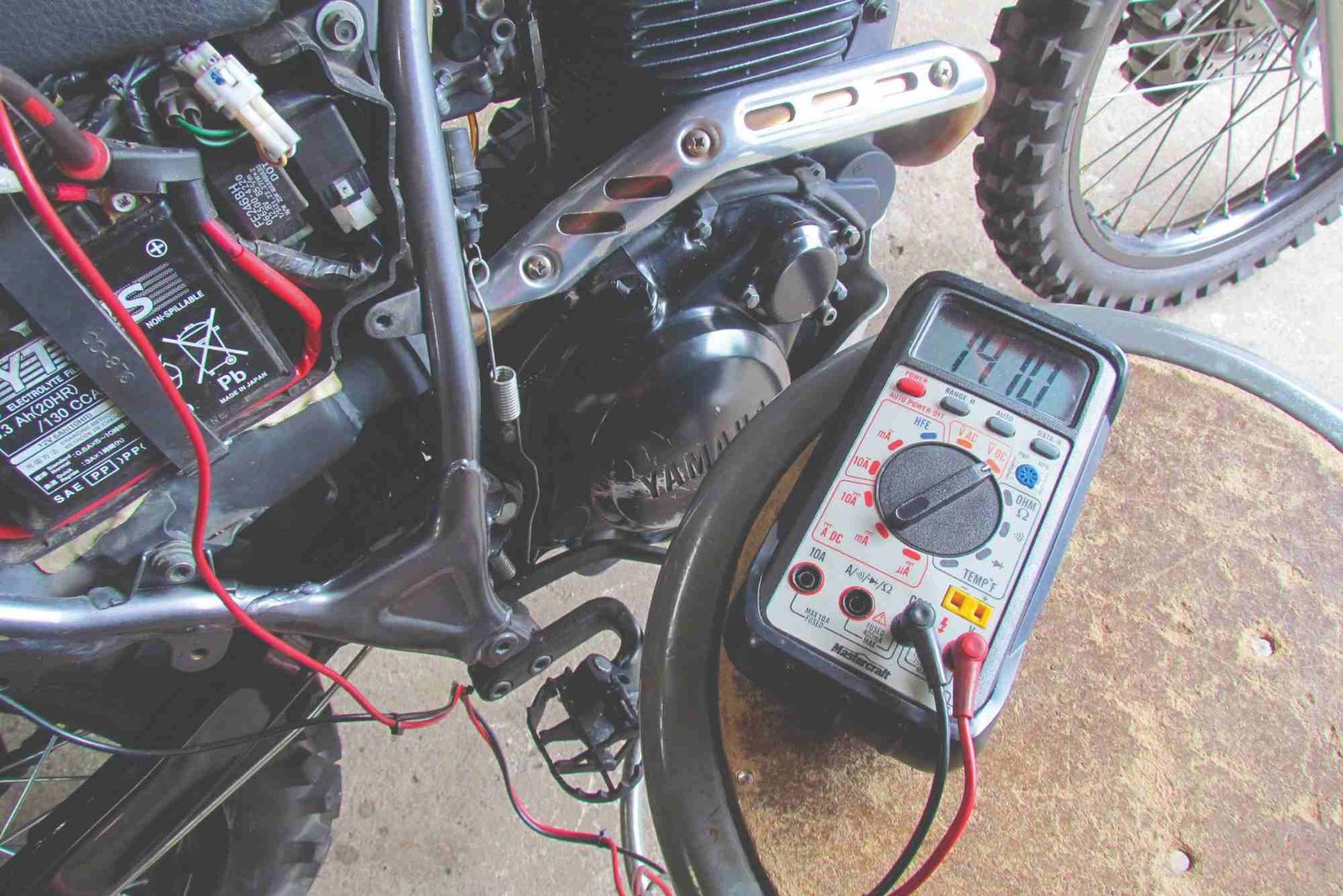
A digital multimeter measures voltage and resistance accurately.
A battery load tester checks battery health under pressure.
Basic hand tools help tighten loose terminals and inspect wiring.
These tools make the process easier and more accurate.
Step-by-Step Guide to Check Motorcycle Electrical System
Check the Battery First
Start by inspecting the battery condition. A weak battery causes most electrical issues.
Measure voltage with a multimeter. A fully charged battery should show around 12.6 volts.
If voltage drops below 12 volts, recharge or replace the battery.
Inspect battery terminals for rust or dirt. Clean them properly to improve connection.
Tighten loose cables to ensure stable current flow.
Test the Charging System
After checking the battery, test the alternator output. Start the engine and measure voltage again.
Voltage should increase between 13.5 and 14.5 volts while running.
If voltage does not rise, the charging system may fail.
Possible causes include damaged stator, faulty regulator, or broken wiring.
Repair or replace defective components to restore proper charging.
Inspect the Starter Motor
If the engine struggles to start, inspect the starter motor.
Listen for clicking sounds when pressing the start button. Clicking often means low power supply.
Check starter connections for looseness.
Test the starter directly with power to confirm operation.
Replace the starter motor if it fails to rotate properly.
Check the Starter Relay
The starter relay controls high current flow to the motor.
A faulty relay prevents the starter from receiving power.
Test the relay using a multimeter or swap it with a similar working relay.
Replace it if no continuity is detected.
Inspect Wiring and Fuses
Damaged wires disrupt electricity flow.
Check wiring harness for cuts or exposed cables.
Look for melted insulation caused by overheating.
Replace blown fuses immediately.
Use correct fuse ratings to avoid future damage.
Examine Ground Connections
Poor grounding creates unstable voltage.
Locate ground wires connected to the frame.
Remove rust and clean contact points thoroughly.
Secure ground connections tightly after cleaning.
Good grounding improves overall electrical performance.
Solutions for Dim Lights
When headlights appear dim, follow these solutions.
Upgrade to high-quality bulbs if old ones lose brightness.
Install LED lights that consume less power and provide better visibility.
Check voltage at the headlight connector to ensure proper supply.
Repair charging system problems if voltage remains low.
Regular maintenance prevents recurring dim light issues.
Solutions for Weak Starter
Weak starters require systematic troubleshooting.
Recharge or replace weak batteries first.
Clean battery terminals to reduce resistance.
Test starter motor efficiency and replace worn brushes if needed.
Fix faulty relays to restore strong current flow.
After repairs, test the starting system multiple times for confirmation.
Preventive Maintenance Tips
Regular inspection reduces sudden failures.
Check battery voltage every month.
Clean terminals to prevent corrosion buildup.
Inspect wiring after long rides or rainy conditions.
Avoid overloading electrical accessories beyond system capacity.
Schedule professional inspection if problems persist.
Prevention ensures long-term reliability.
When to Seek Professional Help
Sometimes troubleshooting becomes complicated.
If voltage remains unstable after testing, consult a mechanic.
Advanced diagnostic tools detect hidden faults.
Professional technicians understand complex wiring diagrams.
Seeking expert help prevents accidental damage during repairs.
Learning how to check motorcycle electrical system: dim lights, weak starter, and the solutions helps riders maintain performance and safety.
Start by inspecting the battery, then test the charging system carefully.
Check the starter motor, relay, wiring, and grounding connections.
Fix issues step by step to restore full functionality.
Regular maintenance prevents major electrical failures.
Take action today if you notice dim lights or weak starting power.
Keep your motorcycle reliable and ready for every ride.
If you found this guide helpful, inspect your bike now and apply these steps.
Stay safe and maintain your motorcycle properly for long-lasting performance.
Car radiator overheating is a common issue that can cause serious engine damage if not addressed quickly. It usually happens due to low coolant levels, a leaking radiator, a faulty thermostat, or a damaged cooling fan. Regular maintenance and timely inspection help prevent overheating problems. If your car temperature gauge rises above normal, stop driving immediately and check the coolant system. Keeping the radiator clean and in good condition ensures smooth engine performance and longer vehicle life.
Frequently Asked Questions
Why are my motorcycle lights dim even with a new battery?
Dim lights may occur due to charging system failure or poor grounding. Check alternator output and wiring connections.
What causes a weak starter on a motorcycle?
Weak starters usually result from low battery power, faulty relay, or damaged starter motor. Testing each component helps find the issue.
How do I test motorcycle charging voltage?
Use a multimeter. Start the engine and measure voltage across battery terminals. It should read between 13.5 and 14.5 volts.
Can bad wiring affect starter performance?
Yes. Damaged wires increase resistance and reduce current flow. Inspect wiring carefully for breaks or corrosion.
How often should I check my motorcycle electrical system?
Check it every few months or whenever you notice unusual signs. Regular inspection prevents sudden breakdowns.