
Introduction
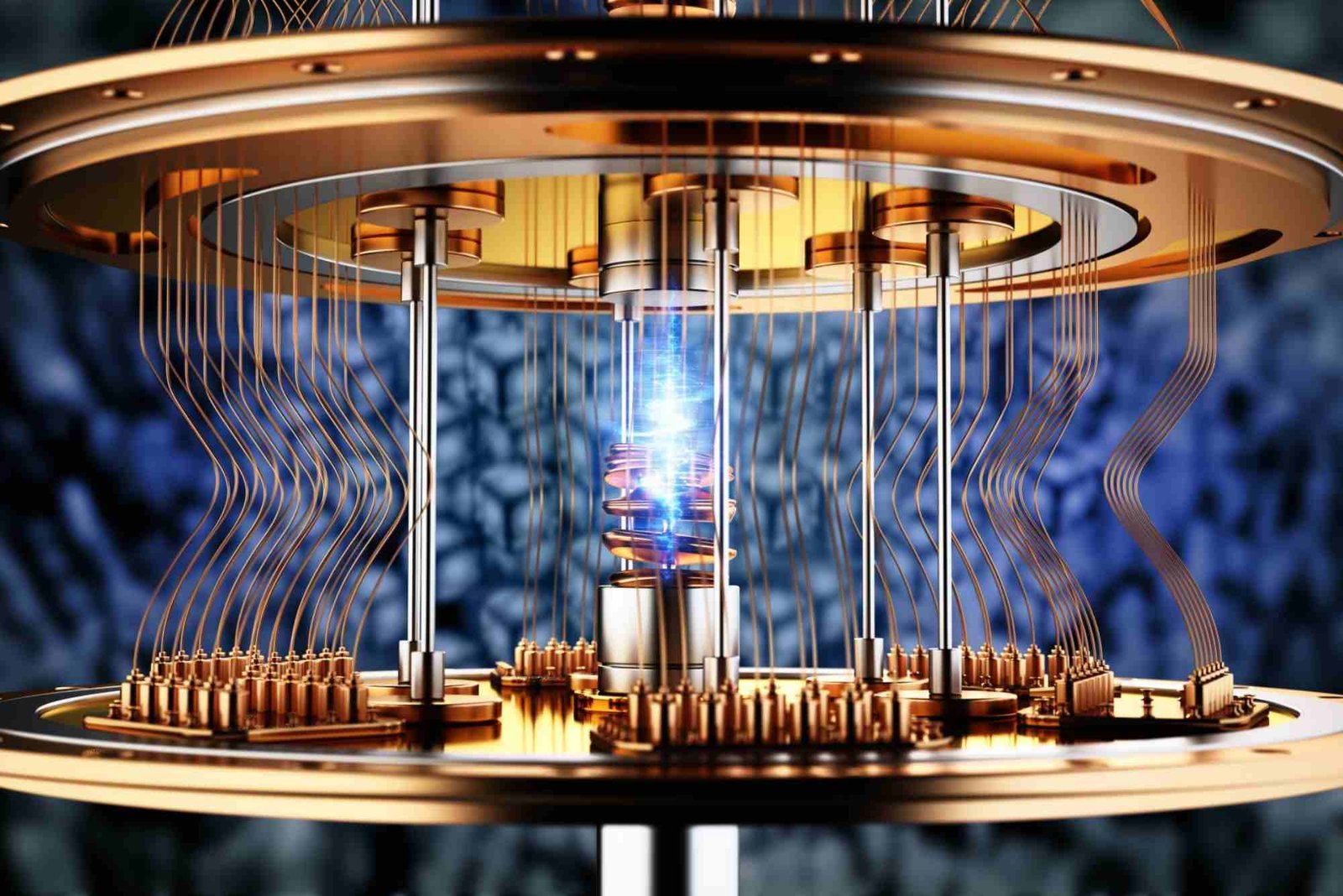
Quantum computing is transforming the way we think about computation. Unlike classical computers, which rely on bits to process information as either 0 or 1, quantum computers use quantum bits, or qubits. These qubits can exist in multiple states simultaneously, thanks to the principles of superposition and entanglement. The development of quantum computing has moved from theoretical physics into practical applications, promising breakthroughs in cryptography, medicine, artificial intelligence, and beyond. Understanding its evolution provides insight into the future of technology.
Understanding Quantum Computing
What is Quantum Computing?
Quantum computing is a branch of computing that leverages the principles of quantum mechanics. Classical computers process data in a sequential manner using bits, while quantum computers use qubits to perform parallel computations. This parallelism allows quantum machines to solve complex problems much faster than traditional computers. While still in its early stages, quantum computing holds the potential to revolutionize industries by tackling tasks that were previously impossible.
Key Principles Behind Quantum Computing
The development of quantum computing relies on several fundamental principles of quantum physics. Superposition allows qubits to exist in multiple states at once, providing enormous computational power. Entanglement enables qubits to remain interconnected, so the state of one qubit directly influences the state of another, no matter the distance. Quantum interference helps manipulate qubit probabilities to reach desired outcomes efficiently. Together, these principles create a computational system far more powerful than classical methods.
Historical Milestones in Quantum Computing
Early Theoretical Foundations
The conceptual foundation of quantum computing emerged in the 1980s. Physicist Richard Feynman proposed using quantum systems to simulate physical processes that classical computers could not handle efficiently. Around the same time, David Deutsch introduced the notion of a universal quantum computer. These early theoretical contributions laid the groundwork for decades of research and experimentation, marking the first steps in the development of quantum computing.
Quantum Algorithms and Breakthroughs
The 1990s saw significant breakthroughs in quantum algorithms. Peter Shor developed an algorithm capable of factoring large numbers exponentially faster than classical algorithms. This breakthrough demonstrated the potential of quantum computers to challenge existing cryptographic systems. Around the same period, Lov Grover introduced an algorithm for database search that was significantly faster than classical methods. These advancements transformed quantum computing from theory into a practical research goal.
Experimental Progress
Experimental quantum computing began with small-scale systems in the late 1990s and early 2000s. Initial efforts focused on controlling individual qubits using trapped ions and superconducting circuits. In 2001, IBM and Stanford University successfully implemented a 7-qubit system to perform a basic quantum algorithm. Over the next two decades, researchers scaled these systems, achieving multi-qubit entanglement and error correction techniques necessary for reliable computation. These experimental milestones highlight the steady progress in building usable quantum machines.

Modern Quantum Computing Technologies
Superconducting Qubits
Superconducting qubits are currently the most widely used approach in commercial quantum computing. Companies like IBM and Google have invested heavily in developing superconducting circuits that operate at extremely low temperatures. These qubits can perform computations with high speed and relative stability. The development of superconducting qubit technology has enabled researchers to create quantum processors with dozens of qubits, paving the way for near-term applications.
Trapped Ion Systems
Trapped ion quantum computers use ions confined by electromagnetic fields as qubits. This technology offers precise control over qubit states and long coherence times. Companies like IonQ and Honeywell have focused on scaling trapped ion systems to achieve larger qubit arrays. The development of this technology demonstrates an alternative approach to building reliable quantum machines and contributes to the diversification of quantum computing research.
Topological Qubits
Topological qubits are still largely in the experimental phase but promise higher error resistance than other types of qubits. Microsoft has invested in this approach, aiming to create stable qubits less prone to decoherence. The development of topological qubits could lead to fault-tolerant quantum computers capable of solving complex problems without frequent error correction. While still in early stages, progress in this area represents a potential breakthrough for the field.
Applications of Quantum Computing
Cryptography and Security
One of the most discussed applications of quantum computing is its impact on cryptography. Shor’s algorithm can break widely used encryption methods, which has sparked interest in developing quantum-resistant cryptography. Governments and corporations are preparing for a future where quantum computers could render current security protocols obsolete. The development of quantum computing has therefore not only technological implications but also profound effects on cybersecurity.
Medicine and Drug Discovery
Quantum computing can revolutionize medicine by simulating molecular interactions at an unprecedented scale. Pharmaceutical companies can use quantum simulations to design drugs more efficiently, reducing development time and cost. The ability to model complex chemical reactions can accelerate the discovery of treatments for diseases like cancer and neurodegenerative disorders. This application highlights how the development of quantum computing can directly impact human health.
Artificial Intelligence and Machine Learning
Quantum computing also enhances artificial intelligence by speeding up data processing and optimization tasks. Machine learning algorithms can be executed faster, enabling real-time analysis of massive datasets. The development of quantum algorithms tailored for AI applications is already underway, promising smarter and more responsive technologies. This synergy between quantum computing and AI is set to redefine computational intelligence.
Financial Modeling and Optimization
Financial institutions can leverage quantum computing for risk analysis, portfolio optimization, and fraud detection. Complex simulations that previously required significant time and resources can be performed in minutes. The development of quantum computing in finance could lead to more accurate predictions and improved decision-making processes. Businesses that adopt quantum technology early may gain a competitive advantage in global markets.
Challenges in Quantum Computing
Error Correction and Decoherence
Despite remarkable progress, quantum computing faces significant challenges. Qubits are highly sensitive to their environment, leading to errors and loss of information, known as decoherence. Developing effective error correction methods is essential for practical quantum computing. Researchers are exploring innovative techniques to maintain qubit stability and achieve reliable computations. Overcoming these challenges is crucial for the long-term viability of quantum systems.
Scalability
Building large-scale quantum computers remains a significant hurdle. Increasing the number of qubits while maintaining coherence and entanglement is technically demanding. The development of scalable architectures is necessary to transition from experimental devices to commercially viable quantum machines. Addressing scalability issues will define the next phase in the evolution of quantum computing technology.
Resource and Infrastructure Demands
Quantum computers require highly specialized infrastructure, including ultra-low temperature environments and precise electromagnetic controls. These requirements make deployment expensive and limit accessibility. As technology advances, researchers are exploring ways to reduce resource demands, making quantum computing more practical and widely available. The development of cost-effective quantum systems will be key to broader adoption.
The Future of Quantum Computing
The development of quantum computing is poised to redefine industries and scientific research. As error rates decrease and qubit numbers increase, we can expect practical applications in cryptography, medicine, AI, and logistics. Collaboration between academia, government, and industry is accelerating progress, making previously theoretical applications feasible. The next decade may witness quantum computers solving problems that classical computers cannot, ushering in a new era of technology and innovation.
The development of quantum computing is an exciting journey from theoretical concepts to practical applications. Its ability to process complex data faster than traditional computers has implications for science, medicine, finance, and cybersecurity. While challenges like error correction and scalability remain, ongoing research continues to push boundaries. For businesses, researchers, and technology enthusiasts, staying informed about quantum computing is essential. Embrace the quantum revolution and explore opportunities in this transformative field.
The development of AI in the healthcare sector is transforming patient care, diagnostics, and treatment planning. Advanced algorithms now assist doctors in detecting diseases earlier, personalizing therapies, and managing medical data efficiently. AI-powered tools improve accuracy, reduce errors, and enhance healthcare accessibility worldwide, making medical services faster, smarter, and more reliable for patients and professionals alike.
FAQ
What is the difference between classical and quantum computing?
Classical computing uses bits that are either 0 or 1, while quantum computing uses qubits that can exist in multiple states simultaneously.
How will quantum computing affect cybersecurity?
Quantum computing could break current encryption methods, leading to the development of quantum-resistant security protocols.
What industries will benefit most from quantum computing?
Healthcare, finance, artificial intelligence, logistics, and scientific research are expected to benefit significantly.
Is quantum computing commercially available?
Yes, companies like IBM, Google, and IonQ offer cloud-based access to quantum computers for research and experimentation.
What are the main challenges in developing quantum computers?
Key challenges include qubit decoherence, error correction, scalability, and high infrastructure costs.